The highway stretched before me like a ribbon of black cutting through the December darkness. My eyes stayed locked on the white lane markings, fingers tapping restless rhythms on the steering wheel to the soft, jazzy carols drifting from the radio.
Six hours behind the wheel, leaving the dust and roar of a West Texas infrastructure project behind me, my body ached with a deep, bone-deep exhaustion only long weeks of twelve-hour construction shifts could produce. But I’d made a promise.
“Will you really be here, Mom? Promise?”
Emma’s voice echoed in my mind from our last phone call. She was nine, already learning the hard way that promises could break. My fault entirely—three years chasing lucrative contracts, missed birthdays, and Thanksgivings spent in temporary housing trailers.
But now I’d saved enough. This was the final rotation. After the holidays, I’d start a project management role in Houston—normal hours, weekends off. I would be a mother in person, not just a voice on a screen.
The GPS chirped, guiding me off the highway to my ex-husband’s neighborhood. Christopher had remarried two years ago to Chelsea, a corporate lawyer. They had moved to a sprawling suburban development—three-car garages, HOA rules, the whole picture-perfect package.
Sometimes Christopher sent photos. Look what you’re missing. Look what we can give. I tried not to let it sting. As long as Emma was happy, my pride could endure the bruises.
Our divorce had been brutal but inevitable. Christopher wanted someone gentle, present, someone who didn’t come home smelling of diesel and concrete. We married too young, had Emma too soon, and sometimes love simply collapses under unpaid bills.
I turned onto Maple Ridge Drive at 9:30 PM. The street was alive with festive lights—inflatable snowmen, laser projections on brick facades, reindeer perched on rooftops.
But at the end of the cul-de-sac, my frown deepened.
The house was dark.
No Christmas lights. No wreath. Only a faint glow from the kitchen window.
My eyes scanned the driveway. Christopher’s SUV? Gone. Chelsea’s Lexus? Gone. Only my old Honda remained—the one I’d left so Emma always had a car in emergencies.
I killed the engine and grabbed my travel bag. The cold bit my cheeks. Maybe they were out late, I thought, though Christopher wasn’t exactly religious.
I tried the front door handle. Unlocked.
“Emma?” I called, stepping inside. “Chris?”
Silence, except for a faint rhythmic sound from the back. I dropped my bag—it thumped against the hardwood—and moved toward the kitchen.
My heart stopped.
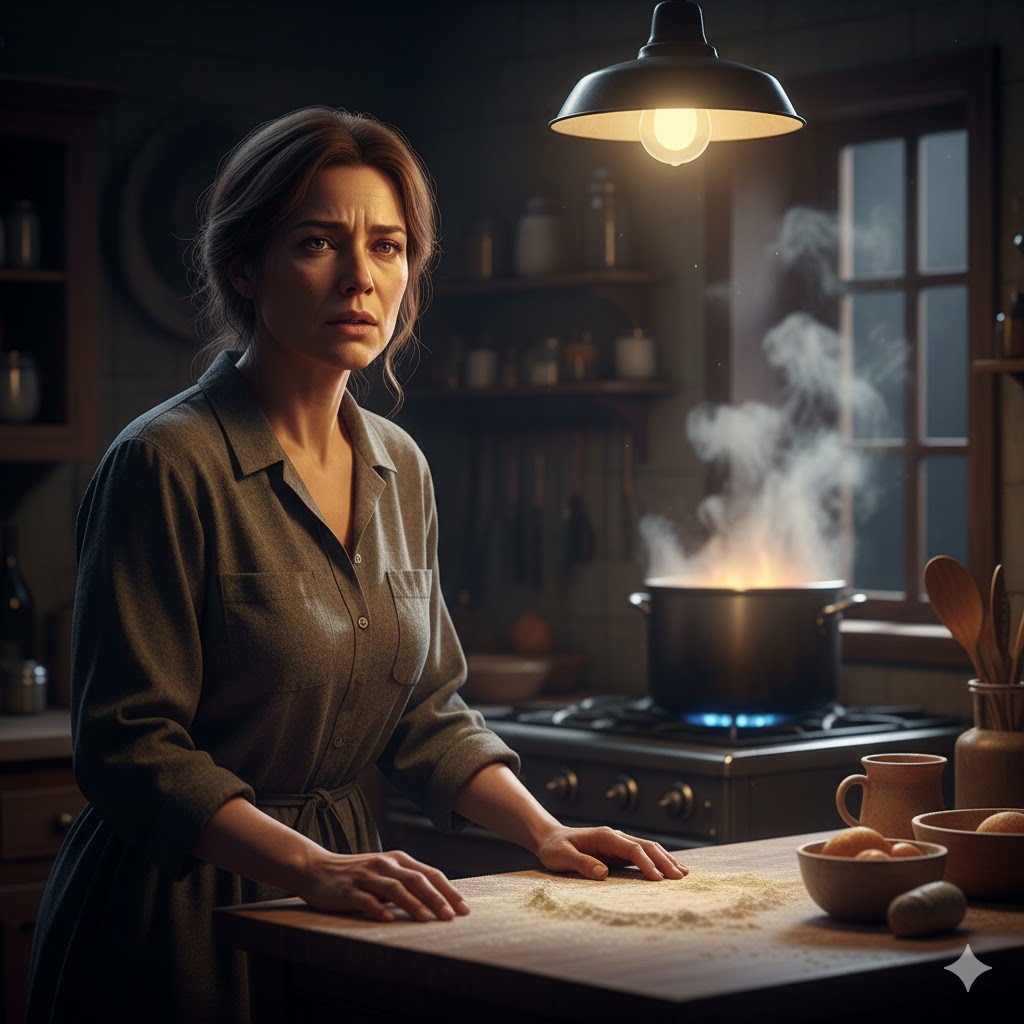
Emma stood on a small stool by the stove, precariously flipping something in a pan. Her dark hair—my hair—was tied back in a crooked ponytail. Penguins danced across her pajamas, oversized fluffy socks hanging from her feet. Flour dusted the granite counters like snow, an open box of pasta tipped over, a pot of boiling water threatening to spill.
“Mom!” She spun around, her face lighting up with a joy that broke me, quickly replaced by embarrassment. “I’m making dinner. I can do it myself. I’m not a baby.”
Three strides brought me to the stove. I turned the burner off.
“Emma, honey, look at me.” I gently turned her toward me. “Where’s your dad? Where’s Chelsea?”
“They left,” she whispered, looking at her socks.
“Left? Where?”
Emma leapt down and headed to the stainless steel fridge. A note was magneted there—a photo of Christopher, Chelsea, and Chelsea’s two sons. Emma was absent. Always had been.
I picked up the note. My jaw tightened as I read:
Denise,
We took the family to Paris for Christmas. Chelsea surprised us with tickets last week. Emma cannot come. There weren’t enough seats, and honestly, Chelsea’s boys deserve this with a father figure. Plus, Emma isn’t part of this family dynamic. Her care is your responsibility.
I left money for groceries and told neighbors you’d arrive tonight. We return Jan 2. Do not call. We need family time.
Christopher
Two reads. White-hot fury seared through me. I wanted to scream, to smash something. But I forced myself still. Emma’s eyes—wide, intelligent, brave—watched.
“I’m okay, Mom,” she said quietly. “I practiced cooking on YouTube. And I packed your gift.”
“Oh, sweetheart.” I knelt and pulled her close. Trembling slightly against my jacket, she felt so small. “I’m here now. I’m not going anywhere.”
She pulled back, eyes sharp and calculating.
“Mom,” she whispered. “Grandma Diana doesn’t know I found her secret.”
Protective instincts flared. “What secret, darling? Did someone hurt you?”
“No, not like that.” She retrieved a thick manila folder from her backpack. “Remember when you asked me to help Grandma Diana clean Grandpa Martin’s office after he died?”
I nodded. Martin Lester had died suddenly in October. I had flown home for the funeral to support Emma, though Christopher’s mother barely let me inside.
“Well, I found a hidden box at the back of his closet,” Emma said. “Behind his old golf shoes. Grandma Diana got mad. Told me not to touch it. But I took photos.”
At the table, she spread the folder’s contents.
A handwritten will, dated two weeks before Martin’s death. A trust fund for Emma, $300,000 for college, split between her father and uncle.
Then a photocopied will, dated a week later, shown to everyone, giving everything to Diana.
The signature—Emma noticed—was forged.
“Grandpa’s hand was shaky after the first heart attack,” she said. “Look at the lines. The second one? Too smooth.”
Emma, nine, had seen through a fraud that adults missed.
I realized then: it was dark, dangerous, and absolutely necessary.
“We’ll give Grandma Diana exactly what she deserves,” I said, voice low. “But we’ll be smart. Patient.”
“Three days,” Emma said, pointing to the Paris note. “Dad said a week, but they return Jan 2. That’s our window.”
I smiled, grim and determined. “Three days. That’s all we need, partner. Three days to burn the kingdom down.”